Time needed 30 to 45 minutes
Best light early morning or late afternoon
Crowds peak 11:00 to 14:00
Toilets in nearby cafés
Entry free
Surface slick when wet
Pronunciation: Miljacka [mil-YAT-ska] • Vijećnica [vee-YECH-ni-tsa] • Princip [PRIN-tsip]
Old town Sarajevo, crossing the Miljacka between Obala Kulina bana and Zelenih beretki
Early morning for quiet lanes and softer river colour; late afternoon for warm bridge light
Free to cross; small fee for the nearby 1878–1918 city museum
Allow 30 to 45 minutes for the bridge, a riverbank angle, and the street-corner museum
From Baščaršija, walk five minutes along Obala Kulina bana. Trams run on the north bank; alight near Vijećnica and cross at the lights. Taxis can drop on the river side; use designated crossings as traffic is steady.
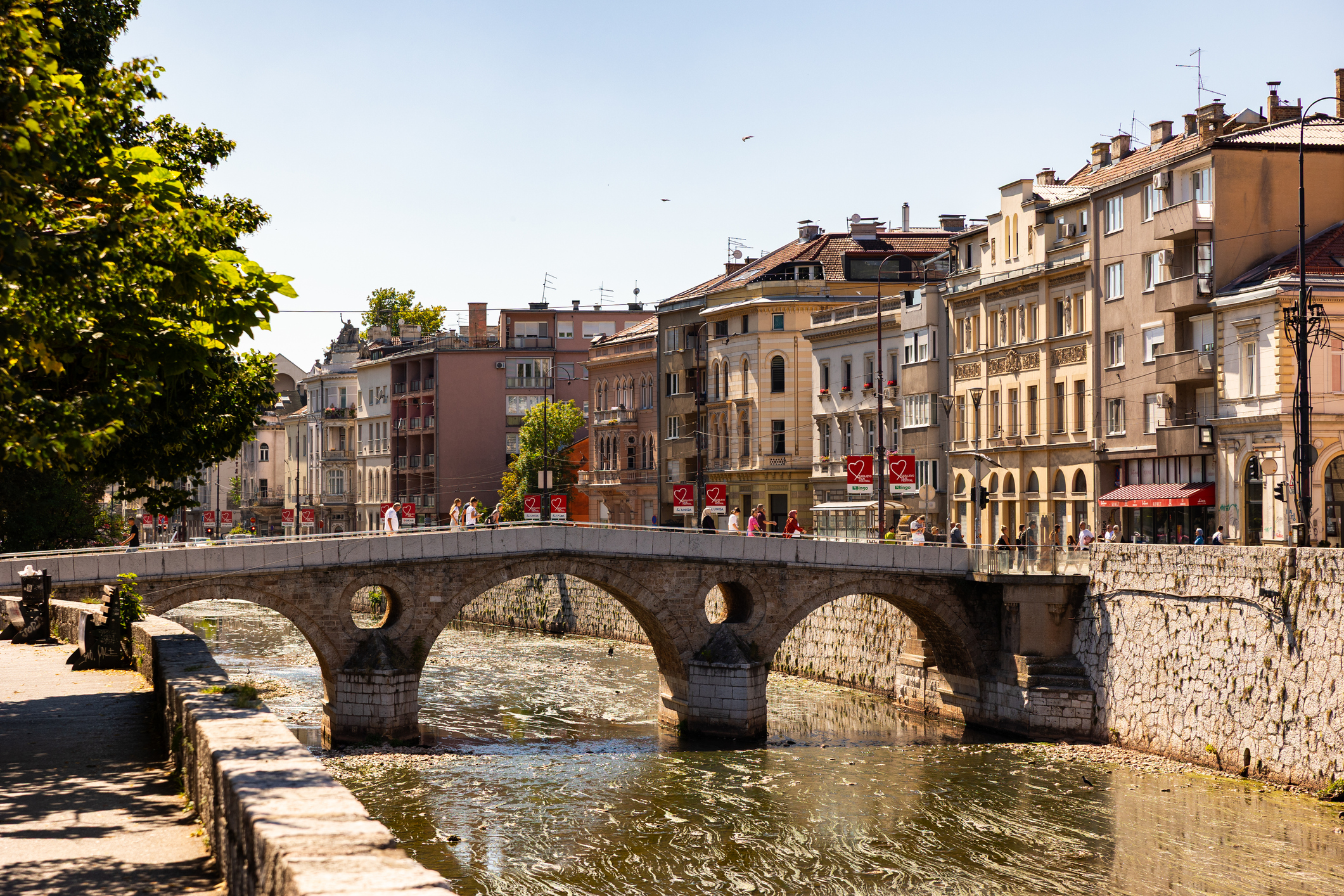
Latin Bridge is a low, stone Ottoman crossing on the Miljacka at the edge of Sarajevo’s old town. Today it is a quiet place to watch the river move under pale arches and to link a bazaar walk with the Austro-Hungarian grid. It is also where an event in 1914 linked a city street to world history. On 28 June that year, Archduke Franz Ferdinand and Duchess Sophie were shot at the corner just beyond the northern end of the bridge. The nearby 1878–1918 museum gives a focused account of the period and the city under Austro-Hungarian rule.
The bridge itself is free to visit and simple to fold into a Sarajevo morning. Time it for early or late light, when the stone reads warm and the river colour deepens. Midday brings more foot traffic, especially in peak months. For context, step into the small museum across the street; it is compact, with maps and objects that help place the buildings and streets you see. Keep language and tone respectful; the site is part of living city life as well as history.
Take your main photo from the south bank first, then cross to the north bank for the corner angle. Reversing the usual approach keeps you a step ahead of small groups.
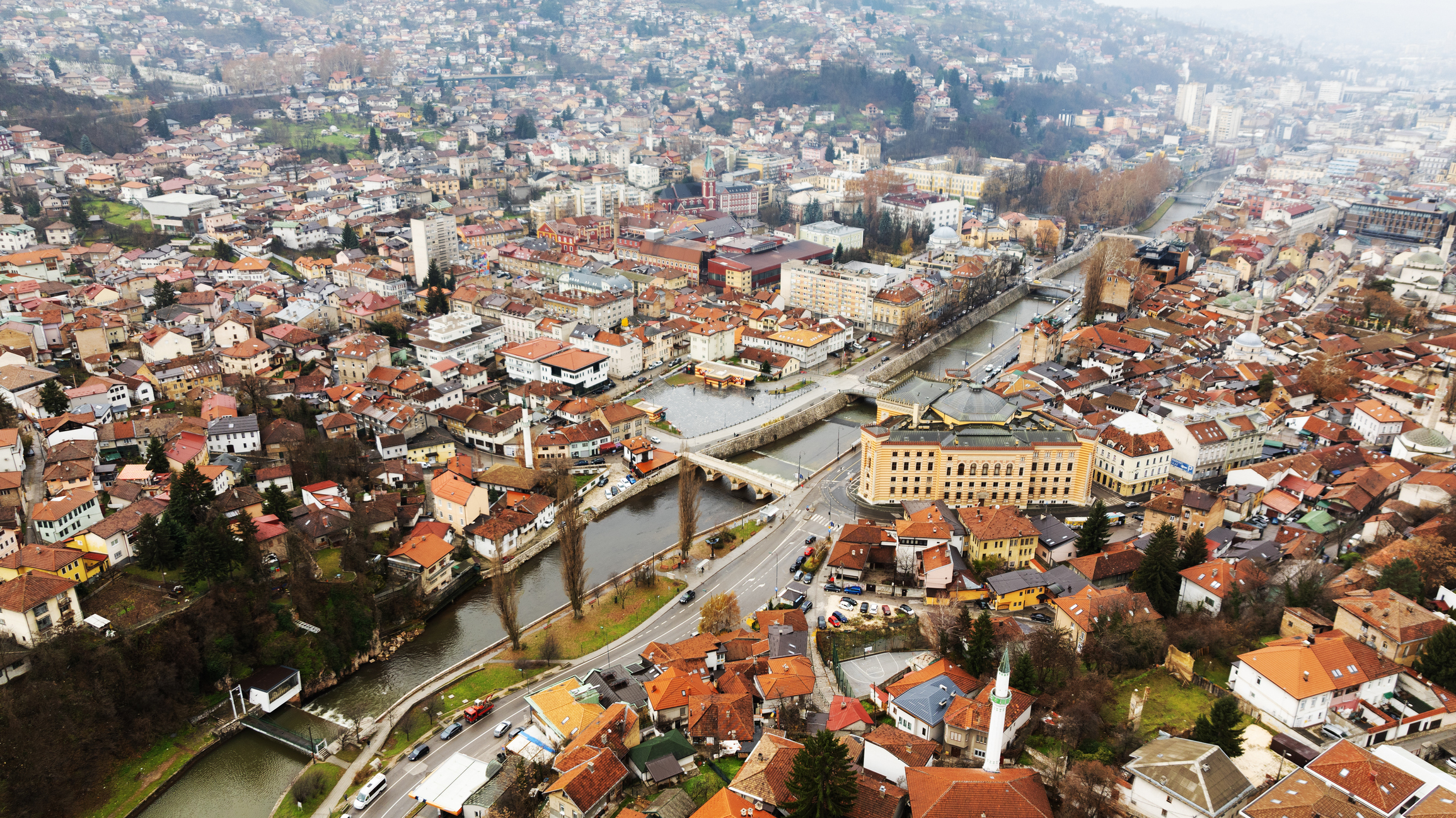
Pair the bridge with Vijećnica City Hall a few minutes east for a clean façade angle before or after your visit, then walk into Baščaršija for coffee.
Now: Corner museum (Sarajevo 1878–1918) for a 20-minute context stop Next: Vijećnica for a façade and river view Nearby: Baščaršija Old Bazaar for copperwork and a kahva set
The bridge is a working crossing with regular pedestrian flow. Surfaces are stone and can be slick after rain or snow. Use the signalled crossings on both banks and stand clear of the kerb for photos. The small museum across the corner presents the period 1878 to 1918 with a focused set of rooms; it is a practical stop before walking to City Hall or the bazaar.
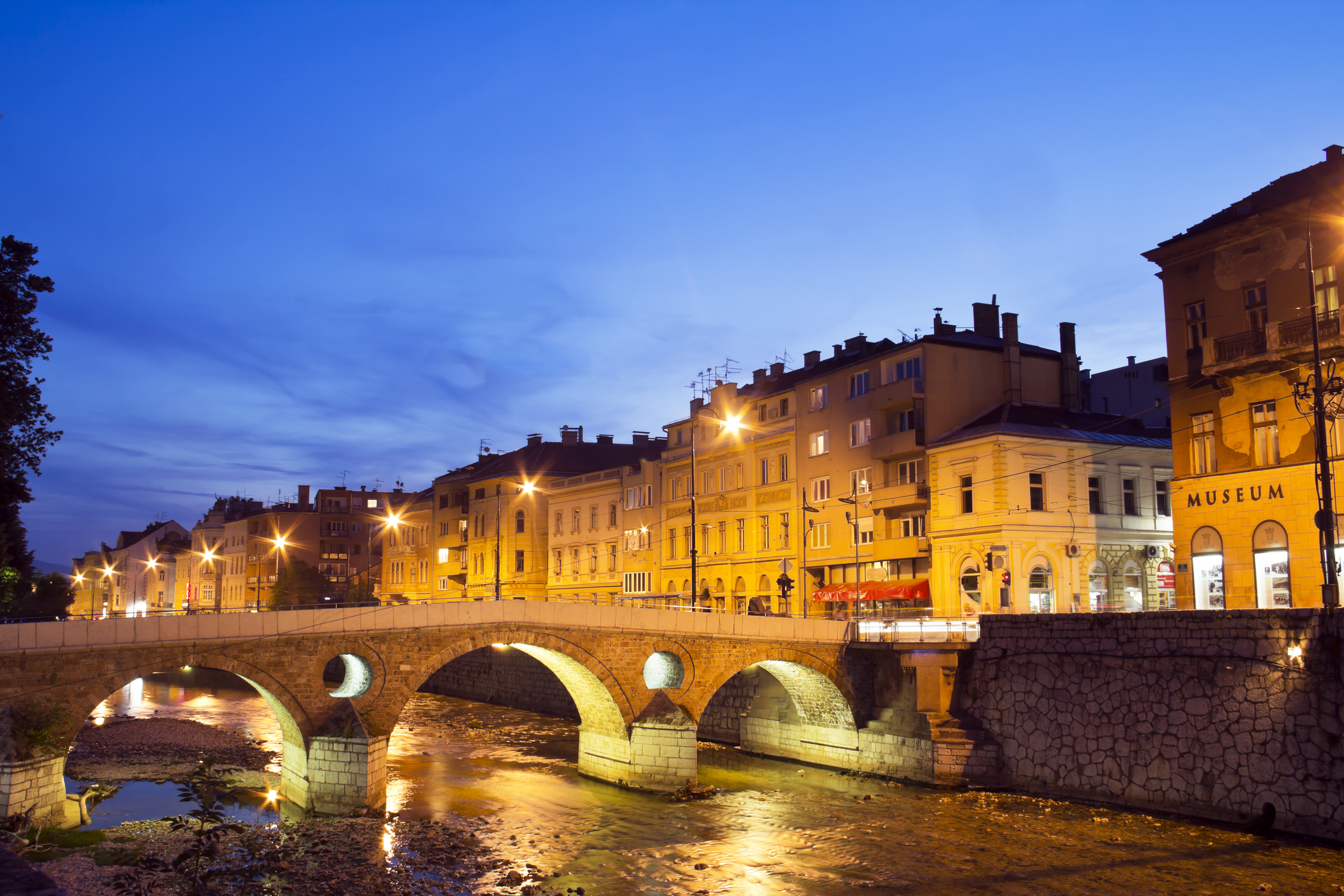
For a wide river view, stand on the south bank by the low parapet, looking north-west along the arches. For a three-quarter angle with the old town behind, use the north bank near the traffic lights and frame the bridge with the river to the left. A third angle sits a little east, looking back with Vijećnica in frame. Early morning or late afternoon gives warm tone on stone and softer water colour.
This corner appears in accounts of the assassination in 1914. If you stop to read the panel or visit the museum, keep voices low and use factual language. Treat it as a place to understand how the city looked and felt at the time, not as a stage for re-enactment or dramatic photos.
Low, pale arches step the river with a modest curve. From mid-span, look east towards Vijećnica and west towards the bazaar’s edge. Light changes the colour of both water and stone across the day.
Across the north end of the bridge, a compact set of rooms covers the Austro-Hungarian period with maps, photographs, and objects. It is a quick, useful way to frame streets you will walk next.
Walk a little east to Vijećnica for clean lines and a broad river view. Walk west into Baščaršija for copper lanes and coffee houses; the contrast is the point.
Look down at paving stones smoothed by steps, and up to the shallow arches each side of the parapet. On quiet days you hear the river carry below the traffic line.
The bridge predates the Austro-Hungarian administration; its location at a bend made it a natural crossing. The 1914 event on the nearby corner has been interpreted differently across eras; the museum presents the period in context. Walking the loop today is a way to connect street geography with wider history and then return to the city’s present rhythm.
Bazaar lanes, Latin Bridge context, and Austro-Hungarian avenues; hotel pick up available
Siege museum with a focused city loop that links older and modern sites; hotel pick up available
WWI corner, short museum stop, and a Vijećnica façade angle; hotel pick up available
Yes. The bridge is a public crossing. The small museum across the corner charges a modest entry fee.
Early morning or late afternoon. Midday brings more foot traffic, especially in summer.
South-bank parapet for a wide view, north-bank corner for a three-quarter angle, and east for a frame with Vijećnica.
Yes. The Sarajevo 1878–1918 museum gives a short, useful context for the era.
Yes. Vijećnica is a few minutes east, and Baščaršija is just west. Many tours cover all three in a single loop.
