Destination
Banja Luka: pair a central city walk with one longer outing
On this page
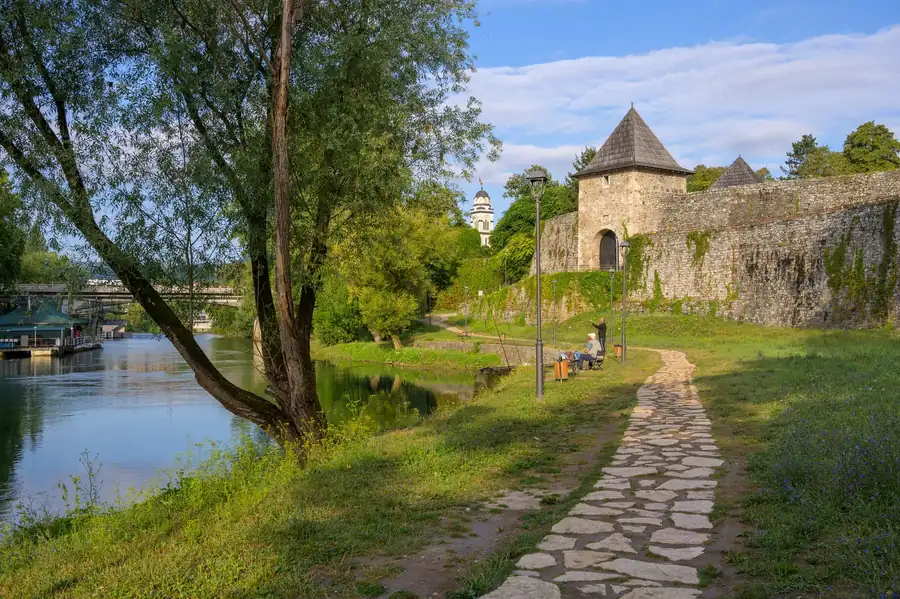
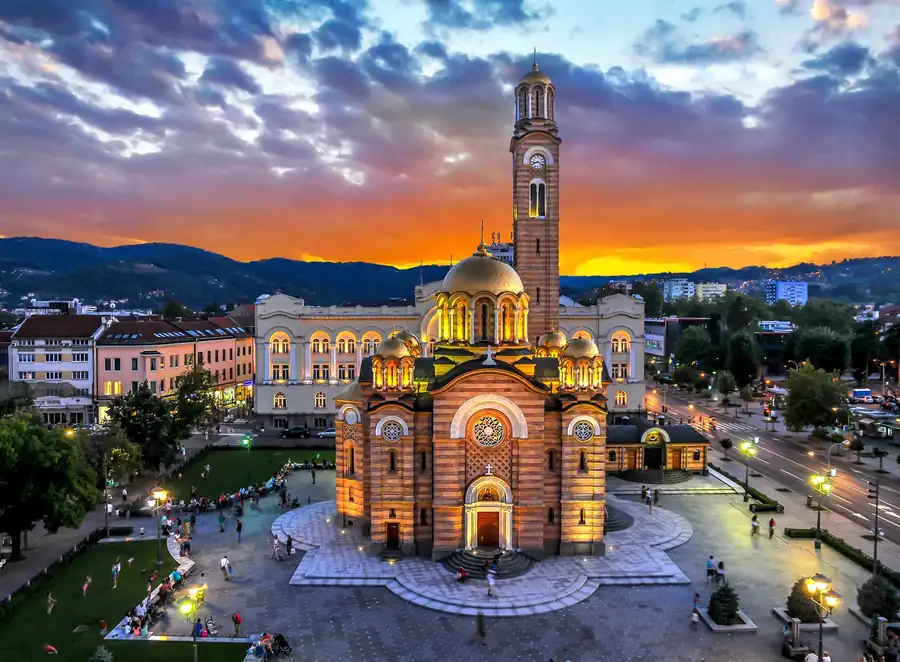
Banja Luka is the second city of Bosnia and Herzegovina and a relaxed one: a riverside fortress, a long pedestrian street and the Vrbas running green through the middle. Give the centre a day on foot, from Kastel and the river to Gospodska Street and the contemporary art museum in the old railway station. Then add one longer outing: the memorial hill at Banj Brdo, or Krupa na Vrbasu’s waterfalls and watermills.
A central day on foot
A simple central walk can start at Kastel, cross towards Gospodska Street and pause near Petar Kočić Park. The official visitor map shows these landmarks; the city’s Gospodska Street listing describes the pedestrian street’s late nineteenth-century architecture. Use the map for orientation, then follow local signs and open routes.
Add the Museum of Contemporary Art of Republika Srpska for a cultural stop with a story rooted in the city. It occupies the former Austro-Hungarian railway station, built in 1891; the museum traces its collection’s origins to the solidarity campaign after the 1969 earthquake, when artists donated around 750 works. The museum’s visitor information lists daily hours of 10:00–22:00 and free admission at Trg srpskih junaka 2. It also has a second gallery at Srpska ulica 10–12, so look at which venue an exhibition is in.
Food and the river
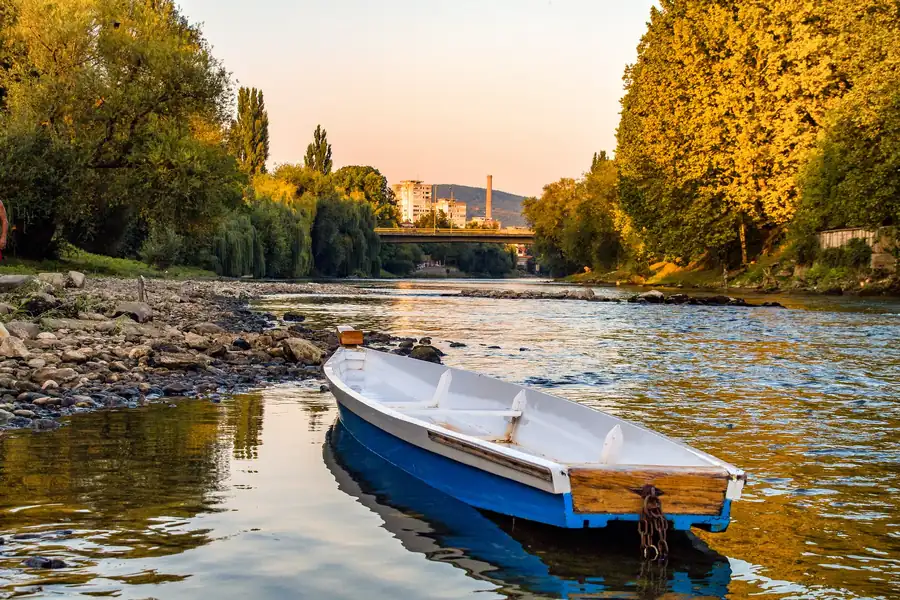
The Vrbas is part of the city day, not only the departure point for rafting. Traditional dajak boats are propelled by a pole against the riverbed; a chance sighting helps explain the river scene without making a boat ride part of this walking plan.
For a meal, look beyond a generic grill menu. The city tourism food guide introduces kvrguša, chicken baked into dough; ljevuša, a poured-batter dish; and krajiške pole, potatoes served with bacon or cheese. If you avoid meat or dairy, ask how it’s made.
Two concrete menu options are Kazamat beside Kastel and the Vrbas, and Hotel Integra’s traditional restaurant. Consult Kazamat or Integra’s menu for the selection and price before ordering.
Arriving and choosing a base
For a walking-first stay, compare central accommodation by its actual entrance and route to the civic centre or Kastel. A place outside the centre can suit a river trip, but you’ll need a car or taxi for dinner.
The flight-linked Smiljić airport shuttle uses two different city stops: the old station behind the post office on Vidovdanska and the main intercity bus station on Braće Podgornika. Central visitors should establish which stop fits their accommodation. Airport buses are listed on the operator’s transfer page; they don’t leave from the museum in the old station or from the company’s office.
Choose one outing beyond the centre
Banj Brdo is the hilltop option: the memorial to fallen Krajina fighters of the 1941–45 National Liberation War stands at the summit. The city’s visitor listing gives its elevation as 431 metres. It’s a proper hill walk: go in daylight and know how you’re getting back.
Krupa na Vrbasu is a different kind of day, about 25 kilometres south of Banja Luka. The Tourist Organization of Republika Srpska highlights cascades and mills on the Krupa River, the Monastery of St Elijah, Greben’s medieval town and a wooden log church. The waterfalls are on the Krupa River, not on the Vrbas itself. Plan the drive and any stops along the way; there’s no simple public transport for it.
A sensible pace
A full day gives you time for the central walk and museum. Add a second day for Banj Brdo or Krupa na Vrbasu so the longer outing does not compete with the city centre.
More for a stay in Banja Luka
- Best day trips from Banja Luka
- Things to do in Banja Luka
- Banja Luka to Jajce
- Banja Luka to Janjske Otoke cascades
- Banja Luka to Kozara National Park
- Banja Luka to Krupa na Vrbasu mills
- Banja Luka to Prijedor town
- Banja Luka to Saničani
- Banja Luka to Sanski Most
- Banja Luka to Stuplje Monastery
- 2 days in Banja Luka
- One day in Banja Luka
- What to eat in Banja Luka
Related Gospodska Street · Krupa na Vrbasu · Museum of Contemporary Art · Choose a destination.