Best-of list
Things to do in Sarajevo: 15 best, in the order to do them
On this page
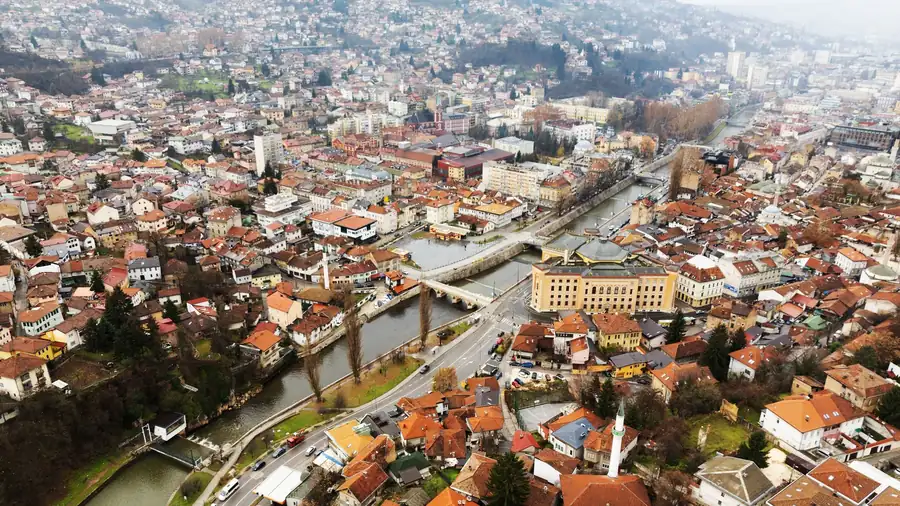
Sarajevo is a walking city, and most of what’s worth doing sits within half an hour of the Sebilj fountain. This list runs roughly in the order a first visit should take it: the old town first, the siege story next, then the hills and the city’s edges. Two full days cover the top eight; the rest are for a third day or a return trip. For a timed plan, use two days in Sarajevo.
The old town
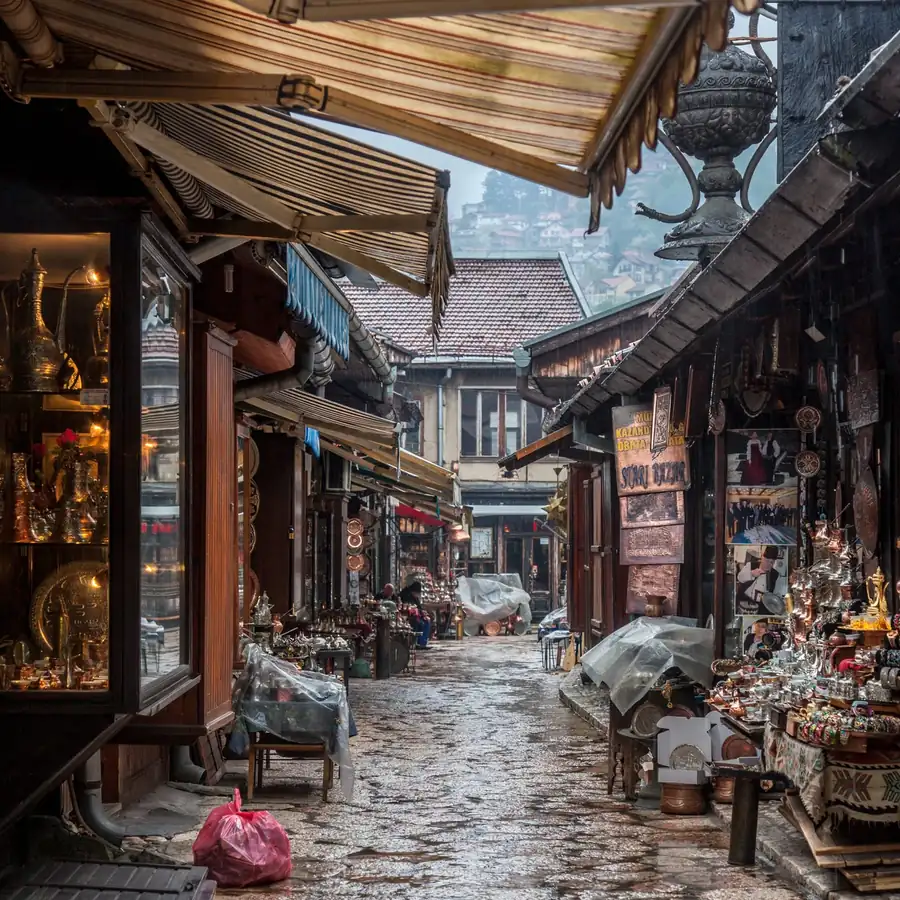
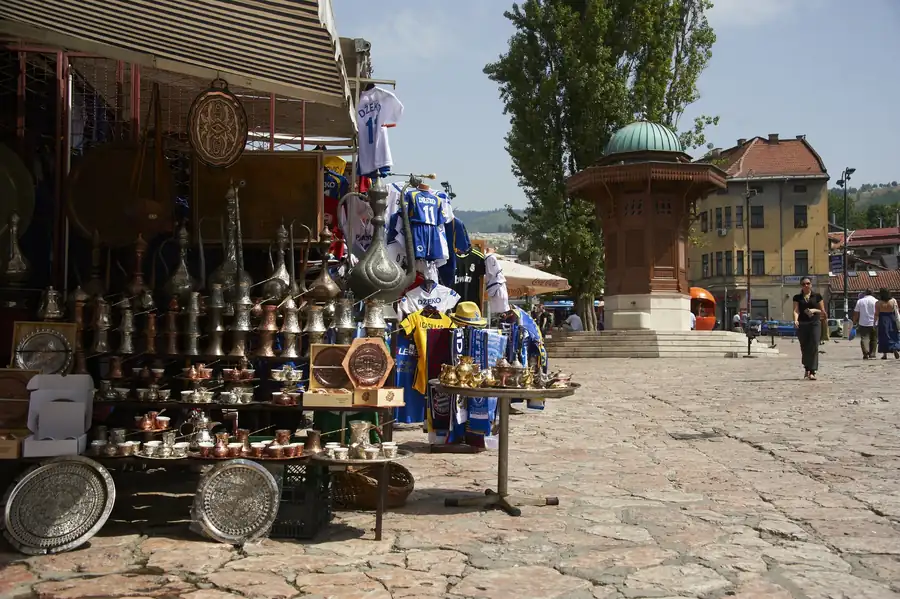
1. Walk Baščaršija. Start at Sebilj, the wooden fountain, and wander the lanes of the Ottoman bazaar: coppersmiths hammering in Kazandžiluk, grills on Bravadžiluk, and small coffee houses everywhere. Give it two to three hours with no plan. Baščaršija guide
2. Cross the “Meeting of Cultures” line on Ferhadija. Walk west from the bazaar and a line in the pavement marks where the Ottoman city ends and the Austro-Hungarian one begins. The low shops behind you give way to tall stucco façades in a few steps.
3. Step into the Gazi Husrev-beg Mosque courtyard. The finest Ottoman mosque in the country sits in the middle of the bazaar, with a fountain in the courtyard and the founder’s tomb alongside. Visitors can go in between prayers; dress modestly. Gazi Husrev-beg guide
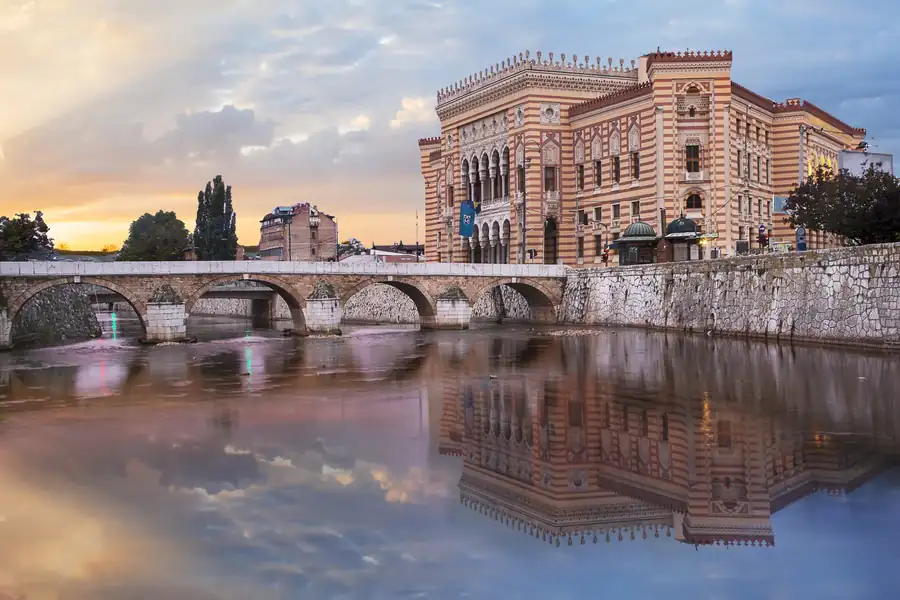
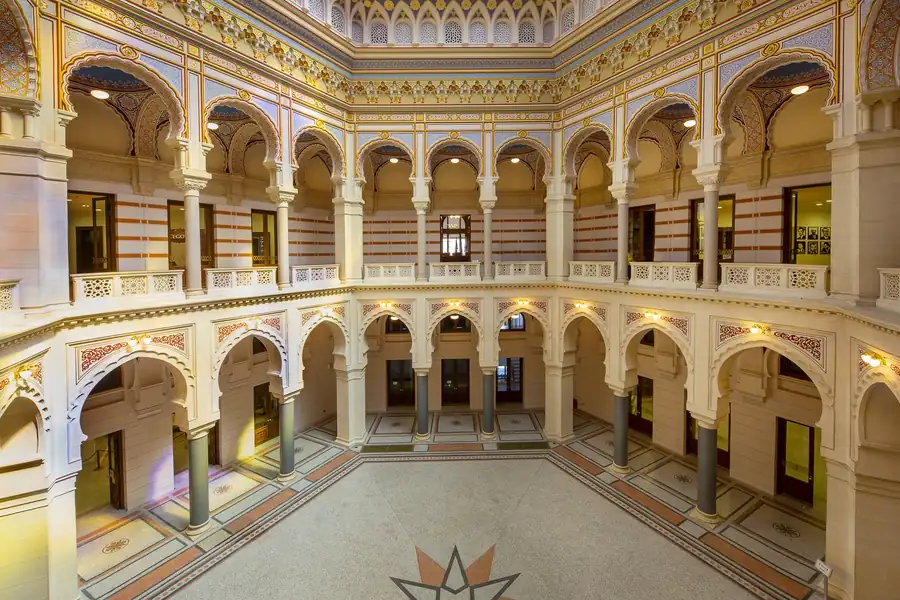
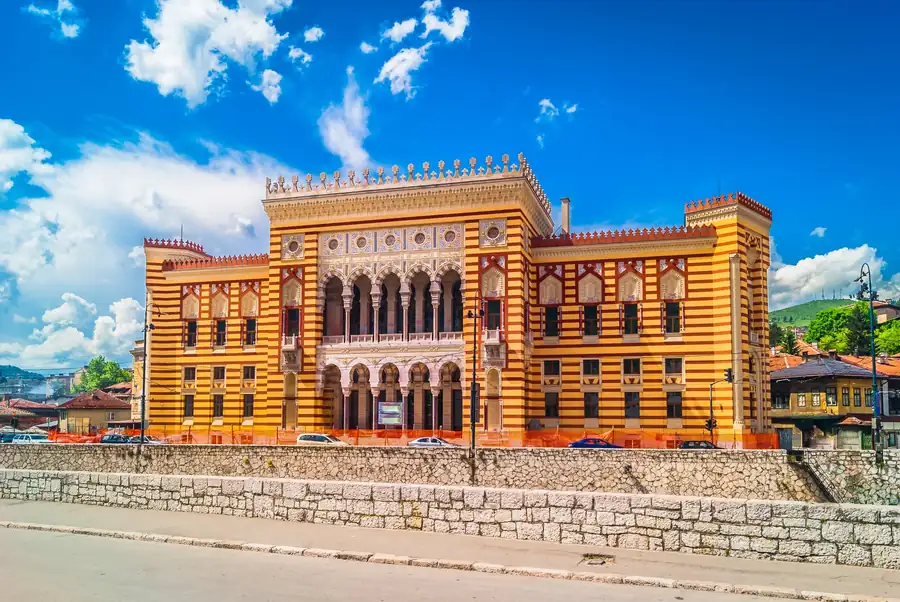
4. Go inside City Hall. Vijećnica’s striped neo-Moorish interior, rebuilt after it burned in 1992 with the national library inside, is the most striking room in the city. Allow 45–60 minutes. City Hall guide
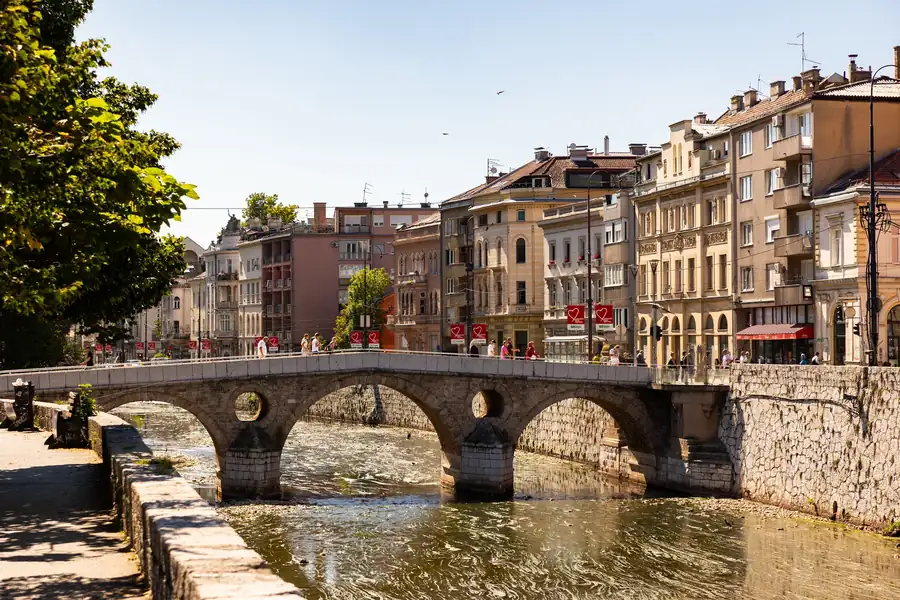
5. Stand at the corner by Latin Bridge. Archduke Franz Ferdinand and Sophie were shot here in 1914, on the street corner at the bridge’s northern end. The small museum on the corner tells the story. Latin Bridge guide
6. Watch the sunset from the Yellow Fortress. A 15-minute climb from Sebilj puts the whole old town below you. Arrive half an hour before sunset. Yellow Fortress guide
The siege and the city’s story
7. See the War Childhood Museum. Ordinary objects kept by children during the war, each with its owner’s account. Allow 60–90 minutes and time to sit afterwards. War Childhood Museum guide
8. Walk through the War Tunnel. At Butmir, by the airport, a short stretch of the tunnel that supplied the besieged city is open, with a museum in the house where it began. It’s a separate half-day by taxi or tour. War Tunnel guide
9. Spend a morning at the National Museum. Archaeology, ethnology and natural history, plus the medieval stećci in the garden. The Sarajevo Haggadah is shown on Tuesdays, Thursdays and the first Saturday of the month, 12:00–13:00. Closed Mondays. National Museum guide
10. Visit the Historical Museum next door. Its exhibition on the siege shows how people lived: home-made stoves, rations, letters. It’s unheated in winter, so dress for it. Historical Museum guide
Houses, faiths and food
11. See a merchant’s house. Svrzo House shows how a Muslim family lived in Ottoman Sarajevo, and Despić House how an Orthodox merchant family lived.
12. Visit the Jewish Museum. In the old synagogue at the edge of the bazaar, it tells the story of Sarajevo’s Sephardic community. Jewish Museum guide
13. Eat your way through the bazaar. Ćevapi in somun for lunch, pita from a buregdžinica, a slow coffee in the afternoon. Ćevapi guide · Bosnian coffee guide · what to eat in Sarajevo
Above and beyond the centre
14. Ride the cable car up Trebević. A short ride takes you to the mountain where the 1984 Olympic bobsleigh track still snakes through the forest, covered in graffiti. Go at midday and check the last ride down. Trebević cable car guide · Olympic bobsleigh track guide
15. Walk the avenue to Vrelo Bosne. Take tram 3 to Ilidža, then walk the 3.5 km tree-lined avenue to the springs of the river Bosna, or ride it in a horse-drawn carriage. A green half-day. Vrelo Bosne guide
If you have more time
- The Olympic Museum: the 1984 Winter Games and Vučko, the wolf mascot.
- Avaz Twist Tower: a quick city panorama near the station.
- A day out: Mostar, Konjic or Lukomir. See best day trips from Sarajevo.
Related Sarajevo guide · Three days in Sarajevo.