Food and drink page
Bosnian coffee: how it’s made, served and drunk
On this page
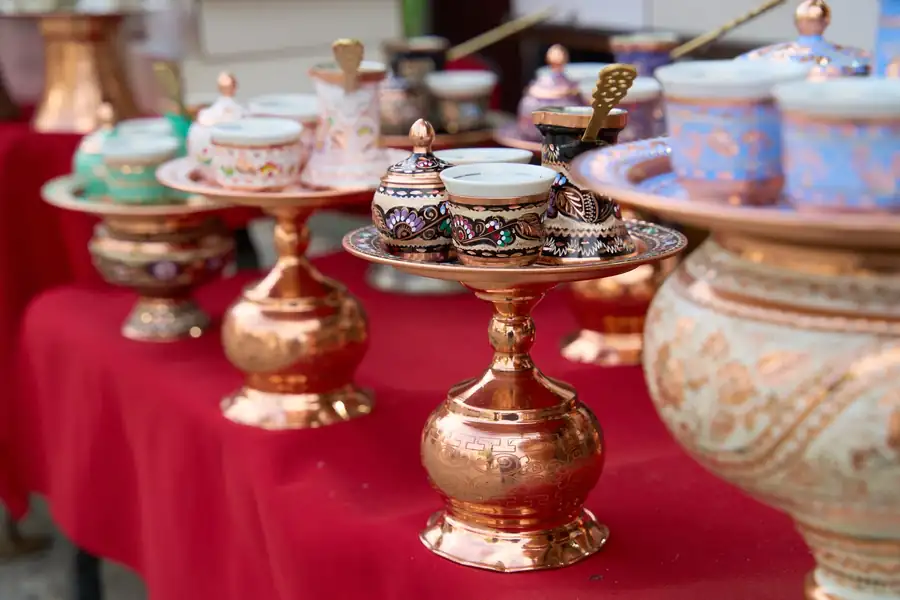
Bosnian coffee arrives on a small copper tray: a long-handled pot called a džezva, a handleless cup called a fildžan, a sugar cube and usually a piece of rahat lokum. Order bosanska kafa (or kahva), pour a little into the cup, and take your time. Nobody drinks it in a hurry; the word for that deliberate, unhurried pleasure is ćejf.
How it differs from Turkish coffee
The grounds are the same, very finely ground coffee, but the method is not. For Turkish coffee, coffee, cold water and often sugar go into the pot together and are heated until they foam. For Bosnian coffee, the water is boiled first, a little is poured off, the coffee is stirred in, and the pot goes back on the heat until the foam rises. Sugar is never cooked in: it comes on the side, so each person decides.
How to drink it
- Pour slowly so the grounds stay in the džezva, and leave the last centimetre in the cup: that’s sediment.
- Many people dip the sugar cube into the coffee and bite it, or let it melt on the tongue, rather than stirring it in.
- The lokum is for between sips. A glass of water often comes alongside.
- One džezva usually makes one or two small cups. Ask for a “duplu” if you want more.
Where to have it
The lanes of Baščaršija in Sarajevo are full of small coffee houses, and a cup there is part of any first walk through the bazaar. In Mostar, take it on a terrace with a view of the river. Coffee is served everywhere in the country, but “bosanska kafa” is the name to look for in Sarajevo; elsewhere you may see it listed as domaća kafa (home-style coffee).
Taking a set home
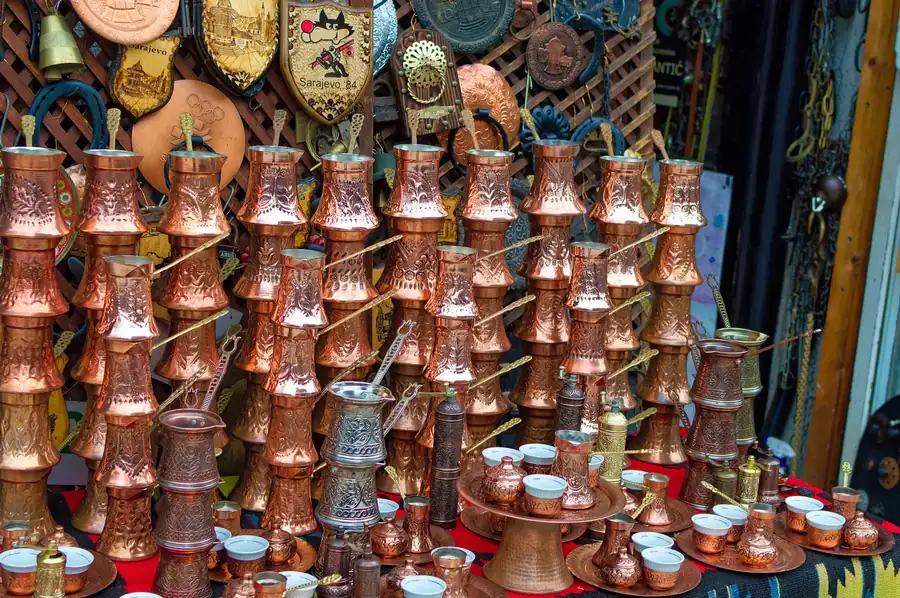
The copper džezva and fildžan sets sold in Sarajevo’s Kazandžiluk make good souvenirs. If you want to use the pot rather than display it, ask whether it’s tin-lined inside, and choose a size for how many cups you’ll actually make.
Related What to eat in Sarajevo · Sweets: baklava, tufahija and hurmašice.