Place guide
Kujundžiluk bazaar
On this page
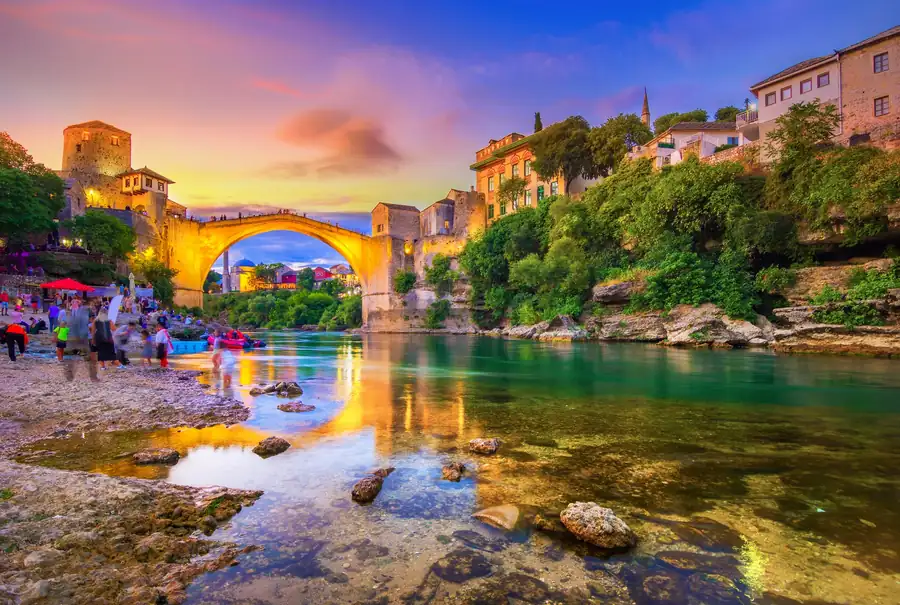
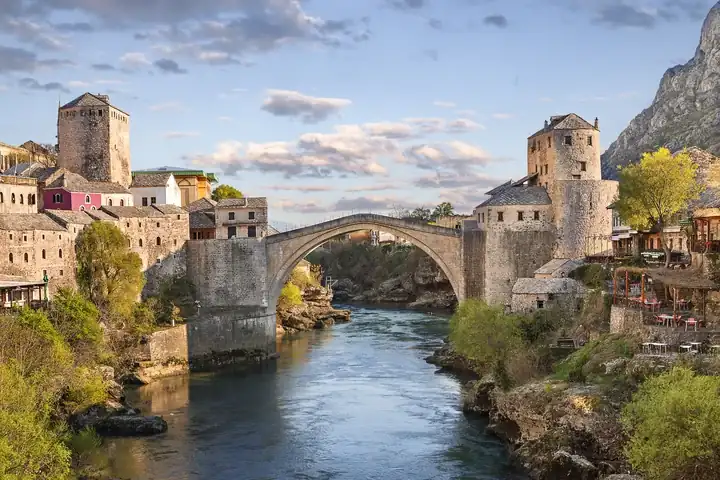
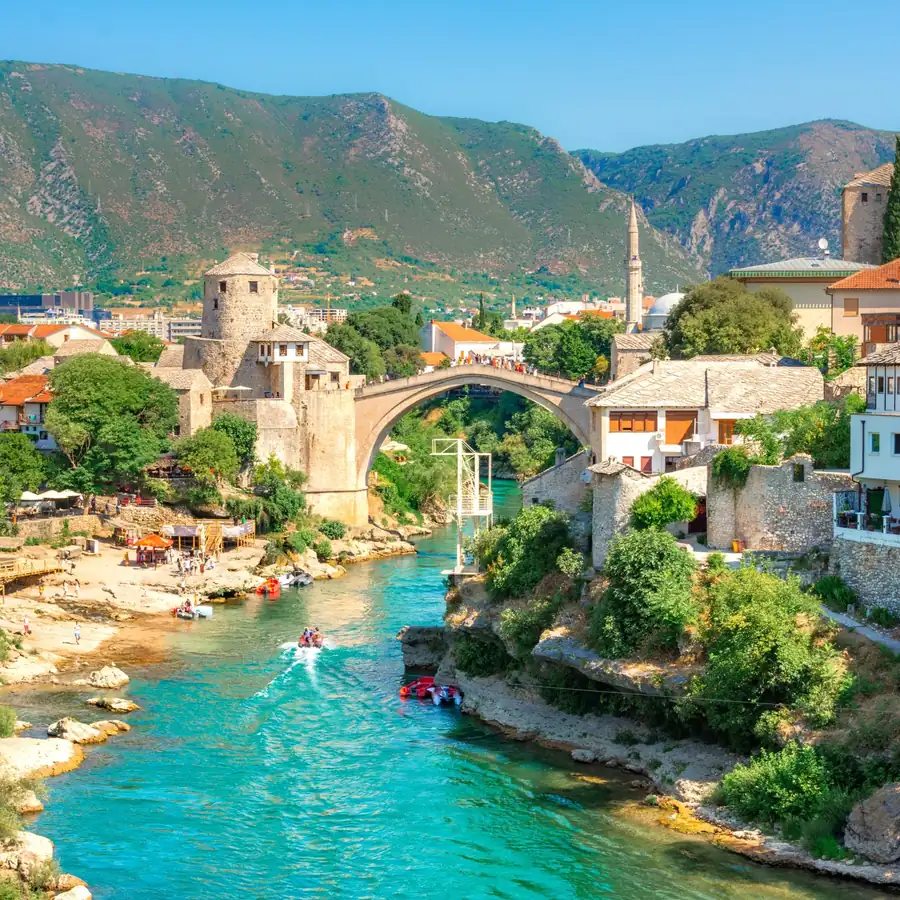
A coffee pot, a relief and a piece of jewellery ask different things of a metalworker. Kujundžiluk’s shops make those differences worth looking at on the approach to Stari Most. Spend 30–60 minutes browsing, then cross the bridge for lunch or the west-bank lanes; buying something is optional.
A street shaped by skilled trades
Kujundžiluk was the goldsmiths’ part of Mostar’s bazaar, alongside copper and ironworking. It belonged to a wider economy of guilds, shops, storehouses and mills, with the bridge connecting the commercial streets on both banks.
The characteristic small shop opened directly towards the street. In the old ćepenak arrangement, horizontal wooden shutters closed the front; the lower shutter could become a seat or working platform when opened. Larger stone magaza buildings combined selling and storage. Looking at the scale of the shopfronts helps explain how work and trade fitted into these narrow lanes.
The street has also been restored and rebuilt, including after wartime damage. Its craft history is older than much of the fabric you see today.
What to notice in the metalwork
Start with the difference between an object made to be used and one made to be displayed. A copper coffee pot, or džezva, has to work as a vessel: look at its shape, handle and interior, then ask how it should be used and cleaned. A decorated plate or framed copper picture invites a different kind of attention, particularly to the surface design.
With a relief, the image stands above its background. Look from the side as well as straight on: the changing light helps reveal its depth. Ask which parts were formed by hand and how the decoration was made.
Jewellery offers another way into the craft. Shaping and finishing copper wire is different from working a decorated metal surface. Compare the closure, edges and weight as well as the design, and ask what metal and finish touch the skin.
Ask how the piece was made and who made it. Ask who made it, where, and how to care for it: the street also sells souvenirs made elsewhere.
Pottery and other goods share the street with metalwork.
Follow the east bank approach
From the north, walk through the Karađoz Bey Mosque area and Braće Fejića towards Mala Tepa. Continue past the Koski Mehmed Paša Mosque area into Kujundžiluk and down to the bridge.
Open the walk from East bus station through those landmarks to Stari Most. The 1.6 km and 23-minute estimate is walking time before browsing, visits or coffee. Allow more time on uneven stone, especially in wet weather or with luggage.
At Stari Most, cross into Onešćukova and continue towards Kriva ćuprija, the smaller bridge over the Radobolja. Stari Most and its optional Tara Tower museum can fill the rest of the morning, with lunch choices on both banks.
Watching a craft or trying it yourself
A demonstration helps you understand the tools and sequence of the work. A hands-on session gives you time to make something, and needs a larger place in the day. Ask what you will actually do: shaping wire, forming a relief and painting a prepared reproduction are different activities.
Arrange the date, duration, price and studio address before building your afternoon around a session. Some studios are across the bridge rather than on Kujundžiluk itself. Check what materials and finished work are included, and explain any access needs or children’s ages when enquiring.
For an ordinary half-day, browse from Mala Tepa towards the bridge, explore the west-bank lanes and finish with lunch. Replace part of that walk with a booked craft session if making something is your priority. The two-day Mostar plan leaves room for that choice.
Buying and access
Individual shops set their own hours, prices and payment arrangements. Browse during the day, carry some KM as a fallback to cards, and check the agreed price before buying. For a pot you intend to cook with, confirm that it is suitable for that use; for a fragile piece, ask for protective packing.
Cobbles, steps and narrow entrances can make a short distance tiring. Take the route at your own pace and check a particular studio’s entrance before booking if access matters.
Visitor information checked 14 November 2026. Route times are map estimates; browsing allowances exclude a booked workshop.
Related Koski Mehmed Paša Mosque · Kriva ćuprija.
Arriving from abroadCan you visit Mostar from Split in a dayDubrovnik to HerzegovinaDubrovnik to KravicaDubrovnik to MostarKotor to MostarSplit to Kravica