Place guide
Kajtaz House: a domestic view of Mostar
On this page
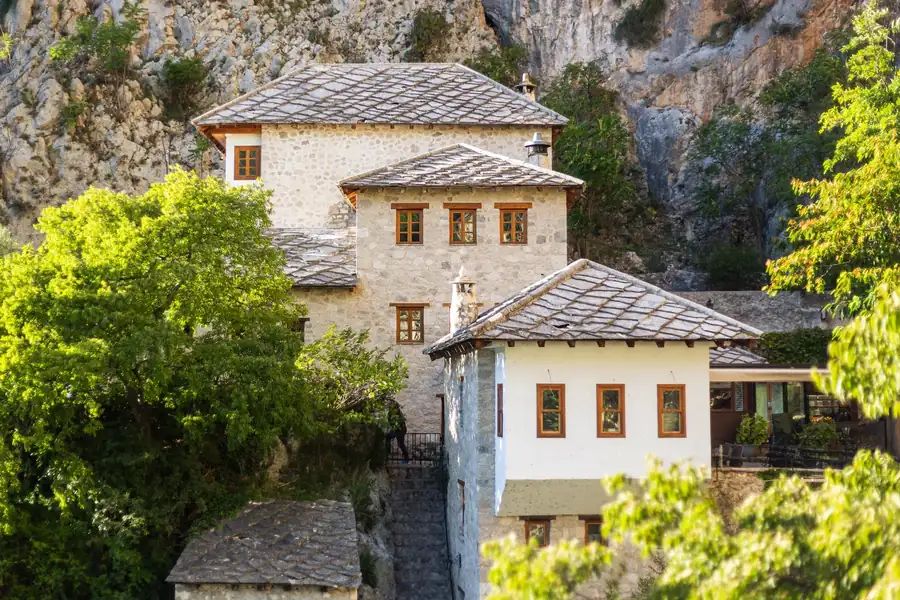
Kajtaz House offers a change of scale after the Old Bridge and the busy approach streets. Its interest is domestic: how a household organised private life, receiving visitors, work and outdoor space within one enclosed complex.
Choose it if rooms, timber details and the relationship between house and courtyard interest you more than another panorama. It is geographically close to the Old Bridge, but visiting depends on the house’s own opening arrangements. Allow 30–45 minutes inside, with 10–15 minutes for the walk from the bridge as a comfortable planning margin.
What to look for
The historical documentation distinguishes the haremluk, the family and private part facing the courtyard and garden, from the selamluk, associated with reception and economic activity towards the street. Those terms become more useful when you think about movement through the house: who would enter, where they would be received and which spaces belonged to family life.
Look for the kitchen, built-in musandera cabinetry and carved timber ceilings where those areas are open. They help make the organisation of the building tangible rather than leaving “Ottoman house” as a broad label.
Pause in the courtyard and garden. The way rooms face the outdoor areas, and walls enclose them, reveals the boundary between household and street.
A history with surviving and rebuilt fabric
Kajtaz is an Ottoman-period domestic complex with an uncertain exact origin. Different accounts date parts of the house to different centuries, so it is more useful to look at how the household developed than to attach one founding year to everything you see.
The complex suffered wartime damage, and its economic part was rebuilt in 1999. Surviving fabric and restoration both belong to its story.
Walking from the Old Bridge
The visitor address is Gaše Ilića 21, in Mostar‘s Luka neighbourhood. The mapped route from the Old Bridge follows Maršala Tita and Gaše Ilića, measuring about 400 metres with a six-minute uninterrupted walking estimate.
Allow 10–15 minutes so the approach is not rushed. Maps may label the address with the street’s “bb” format rather than number 21; identify the house itself rather than assuming that two slightly different address labels indicate different attractions.
The short distance makes Kajtaz an appealing addition to an old-town walk. Ask about the approach as well as the inside if you need step-free access. If steps, thresholds or upstairs rooms affect your decision, ask about the actual visitor route before going.
Opening: plan a midday seasonal visit
A 2026 reopening announcement gave 16 April as the season’s start and 10:00–18:00 as the daily hours. Treat that as a seasonal announcement, not a current year-round promise.
Listings differ on closing time. Ask whether the house is open on your date and whether a visit can be arranged at the time you need, especially in winter. Ask whether the house opens on your date, particularly outside the announced season. The published contact number is +387 61 339 897. The house’s Facebook page is another place to look for announcements, although access to its posts may vary.
Admission and what is included
Ask the host for the current fee, payment arrangements and which rooms are included. Do not rely on an old price or assume entry is free.
How to fit it into a Mostar day
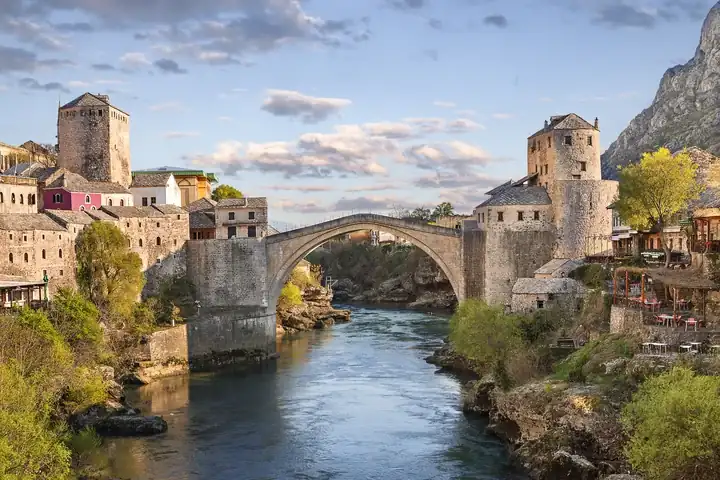
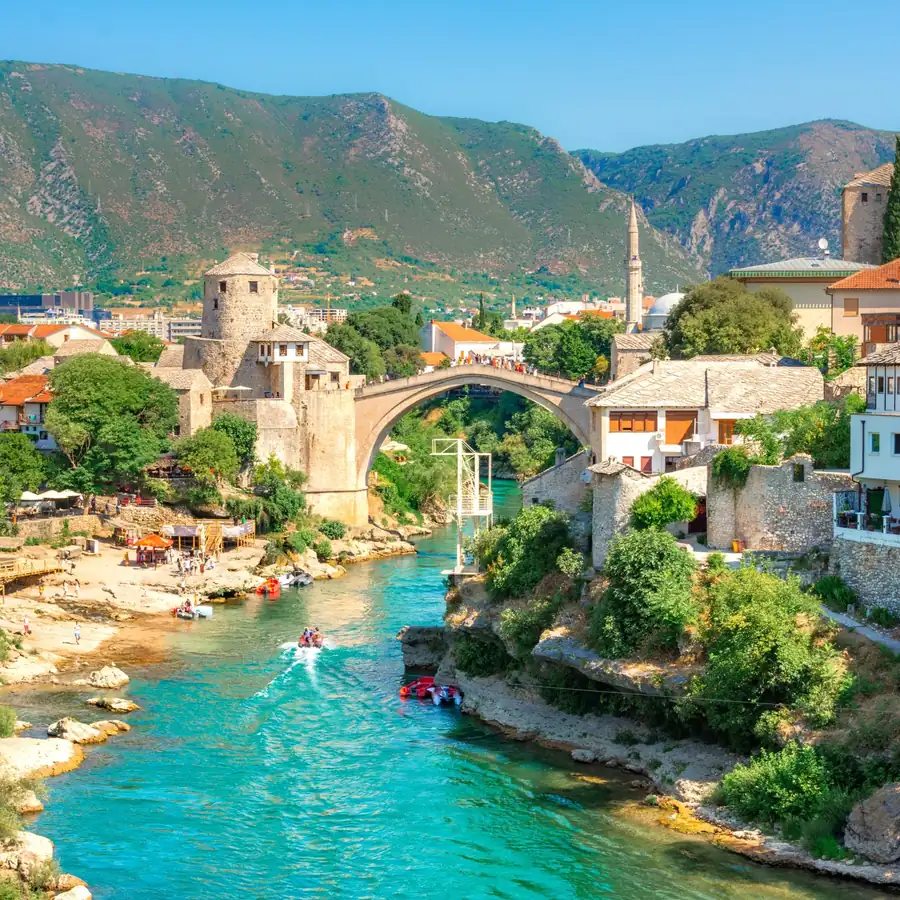
Pair Kajtaz with the bridge area and a meal, giving the house enough time to stand as a different kind of visit. The bridge introduces the river crossing and the wider town; the house turns your attention towards rooms, households and the boundaries between private and public life.