Place guide
Bišćević House in Mostar: a home set above the Neretva
On this page
Bišćević House is a compact domestic-history stop in Mostar. Allow about 30–45 minutes to explore its three furnished visitor rooms and their place within a larger residence.
What makes the house distinctive
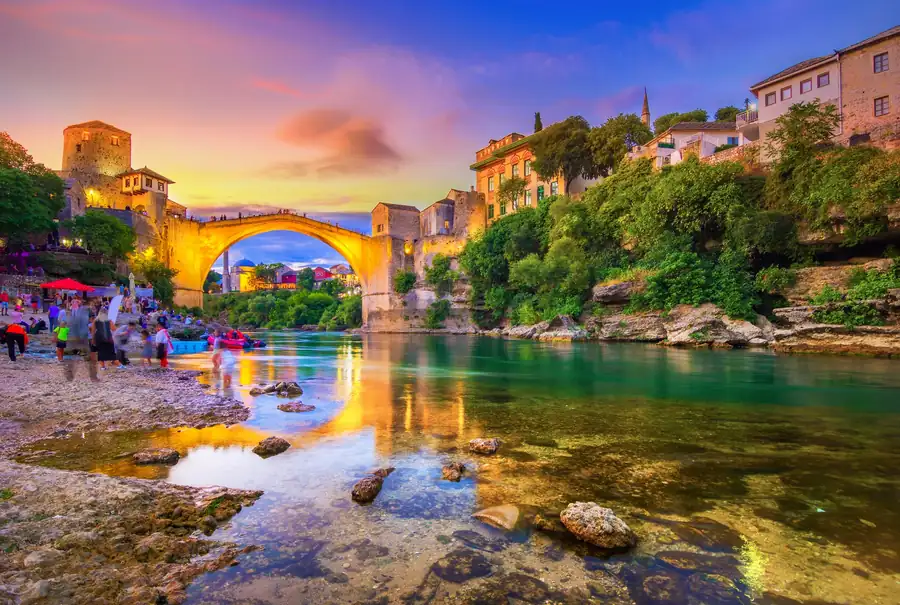
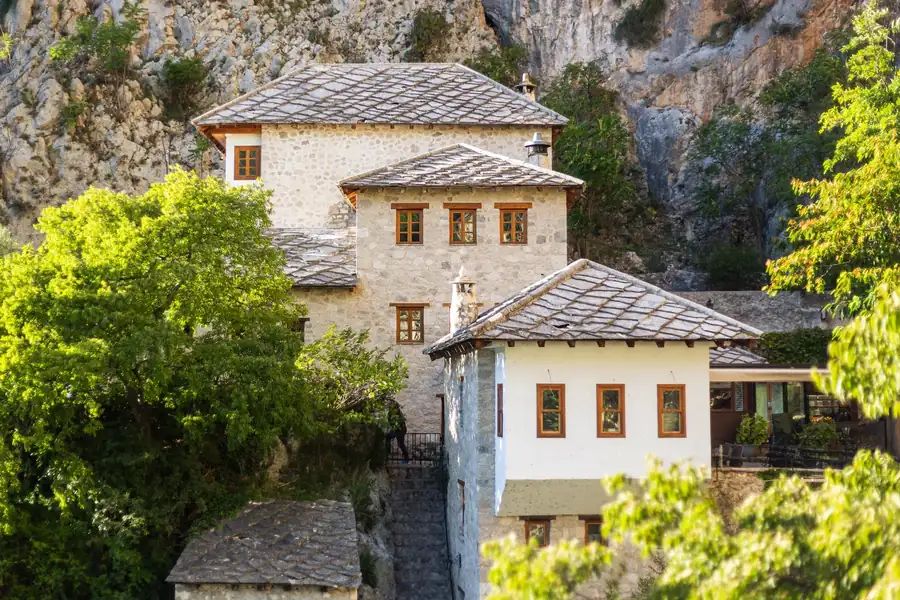
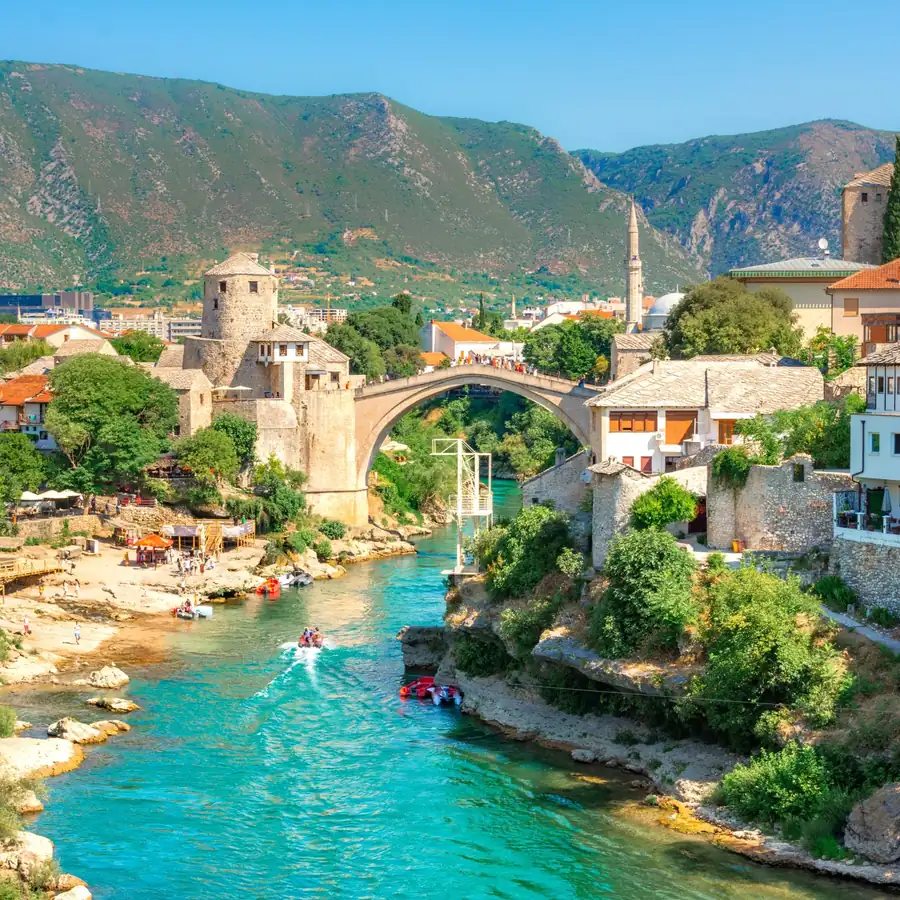
The Bišćević–Lakišić residential complex is described as one of Mostar’s representative Ottoman-era homes. Its riverward corner projects over the Neretva on two tall stone pillars, a bold structural feature that makes the residence distinct from a conventional inward-facing home. A garden is also part of the described residential design.
How to read the rooms
The small bedroom is described as a room for a married couple. The divanhana, or sitting room, has no windows and is described as a summer room; compare its open arrangement with the more enclosed spaces. The men’s room completes the three-room visit.
The house rewards looking at how people moved between private and shared space. An institutional heritage account by Ekrem Tucaković, drawing on the national-monument decision, describes high courtyard walls screening the house from the approach. Semi-open connecting spaces face the courtyard, while the rooms open towards the river. Notice that change of direction as you pass through the parts open to visitors: the house offers both inward-looking privacy and an outlook over the Neretva.
In the large corner room, the account identifies a built-in divan beneath the windows, a carved corner cupboard, a painted chest and wooden shelves. Those details give you specific things to look for beyond a general impression of an “Ottoman interior”. Ask which furnishings are historic and which are later additions; the account also records more recently acquired tables and chairs, so the ensemble should not be read as entirely untouched.
The larger complex separated reception and business space from the family’s intimate living area. The neighbouring Lakišić part is described as residential, not an extension of the visitor museum. Keep your visit to the rooms and courtyard opened by the host.
The house’s history
The surviving residential complex is dated to the late eighteenth and early nineteenth centuries. It belonged to the Bišćević family and was divided into three units as the family grew in the second half of the nineteenth century; the visitor museum occupies only part of it.
The house was damaged during the 1992–1995 war and repaired after the war before reopening to visitors. That history is part of the building’s modern life, but the visit is best understood through the rooms and river-facing structure rather than treated as a war museum.
Address, opening and admission
Use Bišćevića ulica bb as your map destination and pair the house with a walk through Mostar’s old centre.
The Herzegovina Wine Route heritage listing gives daily opening hours of 08:00–20:00 and lists the address and phone number. The published hours are undated, so call ahead before an off-season visit or if you are arriving near closing. The listed contact number is +387 36 550 677.
The listing does not publish a current admission price. Ask the house before setting out rather than assuming entry is free or that a particular payment method is accepted. If you need to know which rooms are open or have specific access requirements, confirm those details in advance as well.
Related Browse the place guides.
Arriving from abroadCan you visit Mostar from Split in a dayDubrovnik to HerzegovinaDubrovnik to KravicaDubrovnik to MostarKotor to MostarSplit to Kravica